


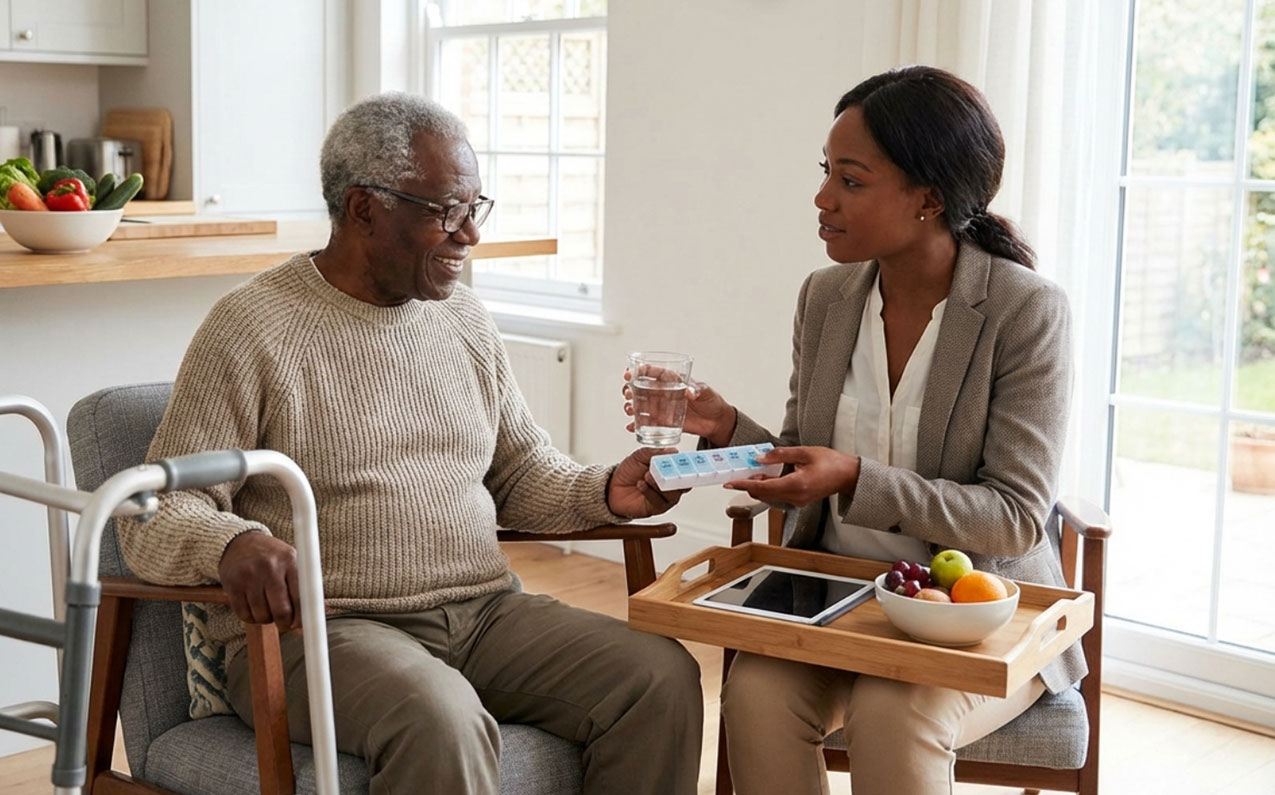
Healthy aging at home requires more than simply remaining in a familiar environment. It depends on a deliberate combination of safety, routine, proper support, and consistent attention to physical and emotional wellbeing. For older adults to live well at home, families and caregivers must take a practical and informed approach that addresses both immediate needs and long-term stability.
Below are six essential elements that support healthy aging at home:
1. A Safe and Supportive Living Environment
Aging at home begins with a space that is safe, clean, and easy to navigate. Fall hazards, poor lighting, and inaccessible layouts can quickly undermine an older adult’s independence. A well-maintained home reduces risk and creates the physical stability needed for daily living. Safety is not a luxury in home care; it is a basic requirement.
2. Consistent Daily Routines
Healthy aging is supported by structure and predictability. Regular routines for meals, rest, medication, hygiene, and activity help older adults maintain physical balance and mental clarity. Without consistency, daily life can become confusing or stressful. A dependable routine strengthens confidence and supports overall wellbeing.
3. Proper Nutrition and Hydration
Good health cannot be sustained without proper nourishment. Older adults require balanced meals and adequate hydration to support energy, immunity, and strength. Poor eating habits can lead to weakness, illness, and slower recovery from health issues. Healthy aging at home demands close attention to what is consumed each day.
4. Ongoing Physical and Mental Activity
Remaining active is essential for preserving mobility, coordination, and cognitive function. Gentle exercise, movement, conversation, reading, and engaging activities all contribute to better health outcomes. Inactivity often accelerates decline and increases dependence. Healthy aging requires intentional efforts to keep both body and mind engaged.
5. Access to Reliable Care and Support
Even independent seniors may need help as their needs change over time. Reliable support from family members, caregivers, or health professionals ensures that challenges are addressed before they become serious. Waiting until a crisis occurs is poor planning. Healthy aging at home requires proactive and dependable care systems.
CONCLUSION:
Healthy aging at home requires preparation, discipline, and the right level of support. It is built on safe surroundings, consistent habits, proper nutrition, active living, reliable care, and emotional connection. When these elements are in place, older adults are better positioned to live with dignity, comfort, and greater independence.